Wednesday, March 23, 2016

The Moon In a Zenith by Anna Akhmatova

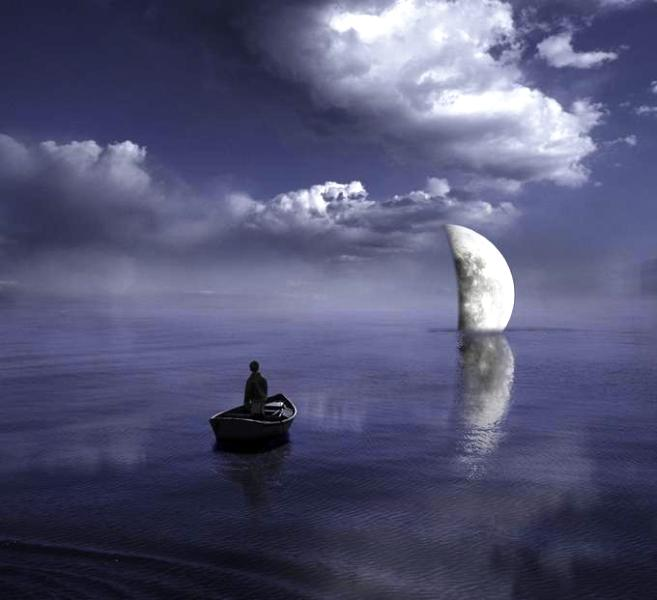
The Moon In a Zenith


I was not here for hundreds years,
But nothing changed for ages here…
In the same way the divine lyre
Pours bliss from the eternal crests.

Same are the waters and stars’ throngs,
And endless bleakness of skies’ domes,
And flying seeds in airy flows,
And mothers sing the same sweet songs.

Forget all troublesome and cruel –
It’s safe – my dear Asian home…
I’ll come once more. Let fences blossom
And pools be clear ones and full.

Anna Akhmatova was married twice  and she had one  son named lev Gumilyov who grew up to become  a soviet  union historian. Her great aunt was the first Russian woman poet. They were the only people in their family to write poetry. Anna started writing poetry when she was eleven years old.She became a published poet in her late teens. When she was seventeen her first husband proposed to her.  Anna died at age seventy six from heart failure. https://en.wikipedia.org/wiki/Anna_Akhmatova
The speaker in this poem is  saying how her home the place she's from never changes and everything stays the same. She loves the way things are and doesn’t want them to change.

Imagery “pours bliss from the eternal crests” and “mothers sing the same sweet songs”These are
important  to the poem because they give off the calm peaceful feel that poem shows;.
Some figurative language in this poem is a Hyperbole  when the author says “nothing  changed in ages”. Another type is personification is when   the author says “it’s  safe my dear home”. These show the author appreciation of her home. And also the dramatic parts of the poem.

The tone in this poem is admiring and appreciative, the speaker is appreciative towards her home. She talks about liking how where she's from never changes everything stays the same and gives her  comfort .The tone to me is definitely grateful happy feeling,

The theme to me is about home how whatever happened during the day can go away and you can be at peace and safe at home. Being around familiar things  can calm you down and make things better. You should appreciate where you come from and your home from where you've been.

Ballad of the Moon By: Federico Garcia

Jheron Edwards
English II
Mrs. Del Dotto, 7th
March 23, 2016

Ballad Of The Moon - Poem by Federico García Lorca

The moon came into the forge

in her bustle of flowering nard.

The little boy stares at her, stares.

The boy is staring hard.

In the shaken air

the moon moves her arms,

and shows lubricious and pure,

her breasts of hard tin.

"Moon, moon, moon, run!

If the gypsies come,

they will use your heart

to make white necklaces and rings."

"Let me dance, my little one.

When the gypsies come,

they'll find you on the anvil

with your lively eyes closed tight.

"Moon, moon, moon, run!

I can feel their horses come."

"Let me be, my little one,

don't step on me, all starched and white!"


Closer comes the the horseman,

drumming on the plain.

The boy is in the forge;

his eyes are closed.

Through the olive grove

come the gypsies, dream and bronze,

their heads held high,

their hooded eyes.


Oh, how the night owl calls,

calling, calling from its tree!

The moon is climbing through the sky

with the child by the hand.


They are crying in the forge,

all the gypsies, shouting, crying.

The air is viewing all, views all.

The air is at the viewing.

http://www.poemhunter.com/poem/ballad-of-the-moon/


Five Facts:


  • Federico Garcia is his real name, but likes to also be called Lorca
  • Federico was accepted in Residencia de Estudiantes in 1919 after moving to Madrid
  • Federico’s first poetic publication was Libro de Poems (1921)
  • His first poems were written for his first important book Canciones, published in 1927
  • In the 1920s, Federico went into playwriting in drama.

Summary of Ballad of the Moon: A little boy has fallen for a beautiful woman in deep lust. He stares at her, struck by her beauty, but they are soon chased by the Gypsies. The Gypsies are trying to capture the boy and woman on their horseman through the forge. The speaker is the narrator of the poem overviewing the boy’s lust for the girl. He is speaking to the readers telling a unique story.   

Analysis of Ballad of the Moon: Federico chose the antagonist of the poem to be a Gypsy. He uses Gypsies as characters to represent the natural man whose instincts and vital passions are not repressed by morals and culture training, “When the gypsies come, they’ll find you on the anvil with your lovely eyes closed shut.” As the Gypsies chase the little boy exposed of sexual instincts, it shows that he is forever threatened by repression but somehow breaks out and often leading to death, “They are crying in the forge, all the gypsies, shouting, crying.” “The little boy stares at her, stares. The boy is staring hard,” the boy as deep aspirations of being with this girl and is suffering through deep lust. These quotes impact the story by showing how lust can distract you and persuade you to make hasty decisions. They capture the boy’s instincts and test his morals with to run from the gypsies or stay with the girl. The author uses imagery such as “breasts of hard tin” to capture the close examination the boy has taken upon himself to stare at the girl due to his case of lust. The author uses personification such as “The moon is climbing through the sky” to show that night is arising.

Tone: the tone of the story is passionate at the beginning when the boy has found the beautiful girl and works on approaching her, but takes a disturbed and despairing turn when the gypsies frightening the girl as well as scaring the boy away in tears.

Theme: as you are young, you will find much lustful feelings for someone and those feelings could come at you to take hasty instincts as well as disrupted morals.

This poem shows a fast paced tempo of rhythm. With this, the poetry is bouncy and easy to read. The poet uses nard to reference to the spikenard (a Himalayan plant). The poetry is repeated in some lines to emphasize the importance of his message in his poetry to make it seem more dramatic. The fast paced tempo helps the foreshadow of the poetry and builds up the climax of it. The poem's rhythm makes the poem more fun to read. The impact of the word choice such as "run", "drumming", "calling" draws in the attention of the reader to the point you don't lose interest in the poem.
If You Forget Me - Poem by Pablo Neruda

I want you to know one thing.

You know how this is:
if I look
at the crystal moon, at the red branch
of the slow autumn at my window,
if I touch near the fire the impalpable ash
or the wrinkled body of the log,
everything carries me to you,
as if everything that exists,
aromas, light, metals,
were little boats
that sail
toward those isles of yours

that wait for me.
Well, now, if little by little
you stop loving me
I shall stop loving you little by little.

If suddenly you forget me
do not look for me,
for I shall already have forgotten you.

If you think it long and mad,
the wind of banners
that passes through my life,
and you decide
to leave me at the shore
of the heart where I have roots,
remember
that on that day,
at that hour,
I shall lift my arms
and my roots will set off
to seek another land.

But if each day,
each hour,
you feel that you are destined for me
with implacable sweetness,
if each day a flower
climbs up to your lips to seek me,
ah my love, ah my own,
in me all that fire is repeated,
in me nothing is extinguished or forgotten,
my love feeds on your love, beloved,
and as long as you live it will be in your arms
without leaving mine.


Link to poem:

Image result for if you forget me
Link to picture:

Pablo Neruda’ s real name is Neftalí Ricardo Reyes Basoalto. Neruda was born on the 12th of July 1904. Neruda was born in Parral, Chile. His father was a railroad employee and his mother died shortly after Neruda was born. Neruda spent his childhood and youth in Temuco. In Temuco he got to meet Gabriela Mistral who was the head of the girls secondary school, she took a liking to him.

Link to biographical information:

The speaker of the poem is a person who is deeply in love but doesn’t want the lover to have like an upper hand kind of, or think that the speaker would lose something if the lover left. The speaker is talking to the person that they love. Every single object in this world carries the speaker to it’s lover, the smells, the metals, the light reminds the speaker to their said lover; the speaker wants the lover to know that the speaker won’t dwell on it if the said lover slowly falls out of love with the speaker or if the lover decides to suddenly leave the speaker. The speaker also wants the lover to know that their love fuels them, feeds them. The speakers fire of love won’t ever burn out if the lover decides to stay and care for the speaker and the love.

“Aromas, light, metals, were little boats that sail toward those isles of yours.” This quote is a metaphor because the speaker is saying aromas, lights, and metals are boats sailing to all the little parts of the speaker. This quote has an impact on the story because the speaker is saying that little objects or little things we don’t always think about has a direct connection to their lover.
“To leave me at the shore of the heart where I have roots” This quote is an example of how strong the lover has made her, with their love. How much that would hurt to if the lover left but she would stay strong at her roots, she wouldn't, go down.
"My love feeds on your love." This quote is an example of imagery. The imagery is taste because the speakers love for the lover is so strong she can almost taste it, and that's amazing.


The tone in this poem joyful, loving, and hopeful. It is joyful and loving because the speaker talks about all the good things about the lover. All the joyful things the speaker that makes it happy. It is hopeful because hopefully the lover won’t leave the speaker.

The theme is saying that the speaker loves someone but can always drop that person. The speaker talks many times about leaving the lover. If for some reason the lover decides not to love the speaker anymore, or suddenly falls out of love with the speaker. The speaker has roots to go back to, to pick up from. Yes, the speaker knows that they will be lonely but the speaker will have somewhere to go, the speaker won't always be lonely.

The stanzas are broken up in different groups. How much the speaker loves the lover. How much the speaker doesn’t want the lover to leave the speaker. How much the speaker will care if the lover leaves them. The speaker is a strong individual. The way the poet breaks up the stanzas are inspiring and clever. The poet splits the poem up so everything is like highlighted in some way.
The street

Here is a long and silent street.
I walk in blackness and I stumble and fall
and rise, and I walk blind, my feet
trampling the silent stones and the dry leaves.
Someone behind me also tramples, stones, leaves:
if I slow down, he slows;
if I run, he runs I turn : nobody.
Everything dark and doorless,
only my steps aware of me,
I turning and turning among these corners
which lead forever to the street
where nobody waits for, nobody follows me,
where I pursue a man who stumbles
and rises and says when he sees me : nobody.

By:Octavio Paz

Octavio Paz, is Mexican poet, diplomat and writer
Born: in March 31 1914 Mexico City
Died: April  19, 1998
He was one of the greatest Hispanic poets of all time in 20th century

Speaker:  The speaker sounds like someone who is paranoid and is scared. He mentions keywords like “ dark”, “long and silent street”  and “ blackness” which gives you an idea of a horror scene.

Imagery: The imagery that the author used appealed to the five senses. When he says “ Here is a long and silent street “, he's appealing it to the hearing and seeing sense. Another quote where he uses imagery is when he says ” Someone behind me also tramples, stones, leaves:
if I slow down, he slows; if I run, he runs I turn”, this is an example of kinesthetic imagery.  

Figurative Language: A  figurative language that is used in this poem is anaphor. When the poet says “ trampling the silent stones and the dry leaves.
Someone behind me also tramples, stones, leaves”.  He repeats “leaves” at  the end of the sentences. Another type of figurative language is personification. When the poet says “only my steps aware of me”. In reality, steps cannot be aware of a person.

Tone: The tone of this poem is mysterious and frightening. The idea of having the feeling that someone is following you is frightening and sound like the person is paranoid. It's mysterious because the whole idea of walking in a dark streets/alleys is so vague .

Theme: The theme of this poem is that people should take life as it comes although you never know what to expect. Life is all about overcoming obstacles.In lines 3 and 4 when he says “ and rise, and I walk blind, my feet

trampling the silent stones and the dry leaves.”, he possibly doesn't know what he wants out of life so he keeps going.

To See Him Again by Gabriela Mistral

To see him again
Not on nights filled with quivering stars,
or during dawn's maiden brightness
or afternoons of sacrifice?

Or at the edge of a pale path
that encircles the farmlands,                                                                           
or upon the rim of a trembling fountain,
whitened by a shimmering moon?

Or beneath the forest's
luxuriant, raveled tresses
where, calling his name,
I was overtaken by the night?
Not in the grotto that returns
the echo of my cry?

Oh no. To see him again --
it would not matter where --
in heaven's deadwater
or inside the boiling vortex,
under serene moons or in bloodless fright!

To be with him...
every springtime and winter,
united in one anguished knot
around his bloody neck!
Poem Analysis
  • The poem tells the story of a woman who has been heart broken. The speaker is really just speaking to anyone that will listen to her story of heartbreak. The breakup of her and a previous was rather traumatic. She explains that the relationship was hard, and that she never never wishes to see them again. She does not care the circumstance or location, not even with a noose around their neck.
  • The author uses a lot of imagery that appeals to your sense of sight.  She describes “nights filled with quivering stars” and “luxuriant, reveled trees” . The author also uses imagery that can appeal to your sense of sound. For example, she discusses the “echo of her cry”. The poem has very little figurative language.
  • The poem has a very somber tone. She explains in very sad words how she would never like to see this person again. Despite the words, even the message has a somber tone she is traumatized by this experience.
  • The overall theme of the poem is that breakups are hard and it is best to detach completely. While the poem is just stating that regardless of circumstance or location she wishes never to see this lover again, there is some reading between the lines that the reader can do. Personally, I think that she is saying that her personal heartache was just too awful, that she can not physically bear another encounter with this person. However, the title “To See Him Again” implies that she has put much thought into what an encounter with this person would be like. She comes to the grand conclusion that, even if it is their dead body; she simply can not bear it.
  • In the poem, I noticed a pattern in the locations that she choose to mention. Several of these locations are nature themed, she mentions “pale paths” and “farmlands”. I also noticed that the subject of the poem is really up to the reader's interpretation . She never clarifies her relation to whoever “he” is.The poem progresses so that we can understand her negative feelings towards her ex lover. She begins with not want to see him under the moon, but then progresses to her not even wanting to see his dead body.

Gabriela Mistral

Biographical Information -Gabriela Mistral was  April 7, 1889 in  Vicuña, Chile. She died on  January 10, 1957 in Hempstead, New York. She became a school teacher at age 15, then later a college professor, cultural minister, and diplomat. In 1914, she won a Chilean prize for three "Sonetos de la muerte" ("Sonnets of Death"), works influenced by the suicide of her former lover. Then in 1945, she was the first Latin American to receive a Nobel prize in literature.
Sources-
http://www.nobelprize.org/nobel_prizes/literature/laureates/1945/mistral-facts.html http://www.biography.com/people/gabriela-mistral-9410123 http://www.poemhunter.com/poem/to-see-him-again/#content\
http://www.quotationof.com/gabriela-mistral.html
Night on the West River By: Po-Chu-I
No moon
To light my way upon the stair,
Cold comfort
In the wine I drink alone.
Black clouds,
Rain,
The hurried flight of birds,
Water flowing grayly
In the dusk.
A rising storm,                                       
Boats tugging at their mooring ropes.
Or sails full-spread
To take advantage of the wind.
A moving point of fire
In the dark,
The distant lantern
Of a passing boat.
Translated by Henry Hart

Information about the poet:

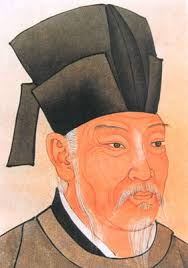
He lived (772-846)
Great writer of the Chinese Tang dynasty.
He was born in T’ai- yuan in shansi late moved to Ch’ang.
He wrote poem that was simple and easy to understand.
He was government officer, and lived during the Middle Tang. 
When his parents died he would go to Wel River to get over his grief.
(I think this poem was written at the same river because of how depressing and dark the poem is)


Speaker: The speaker of the poem is a person who is lonely. For example Po-Chu-I uses words to like comfort, alone, distant, black clouds to symbolize how lonely the poem is.
Imagery:  “The hurried flight of birds” shows imagery of birds flying away from the storm. This makes the poem more  lonely.  “Black clouds/ rain”  makes the reader feel scared. Since the speaker is on the water this make the reader worried.  
Figurative Language: The figurative language is the metaphor “a moving point of fire in the dark”. This uses to show the light in dark place but it is really a lantern passing by. “Cold Comfort” is alliteration. This is used to show irony because wine is not a comfort to him.
Tone: The tone of this poem is depressing.  The poem uses dark images to show the loneliness of the speaker. The poet uses cold and stormy images to make the reader feel fearful.
Theme: The theme of this poem is being on a boat by yourself in cold storm night can bring loneliness to a person. It also tells us he can’t escape his loneliness because he is in the middle of a river by himself. He can’t also escape the darkness or the storm. Being on a boat by yourself is scarce because there is no comfort.